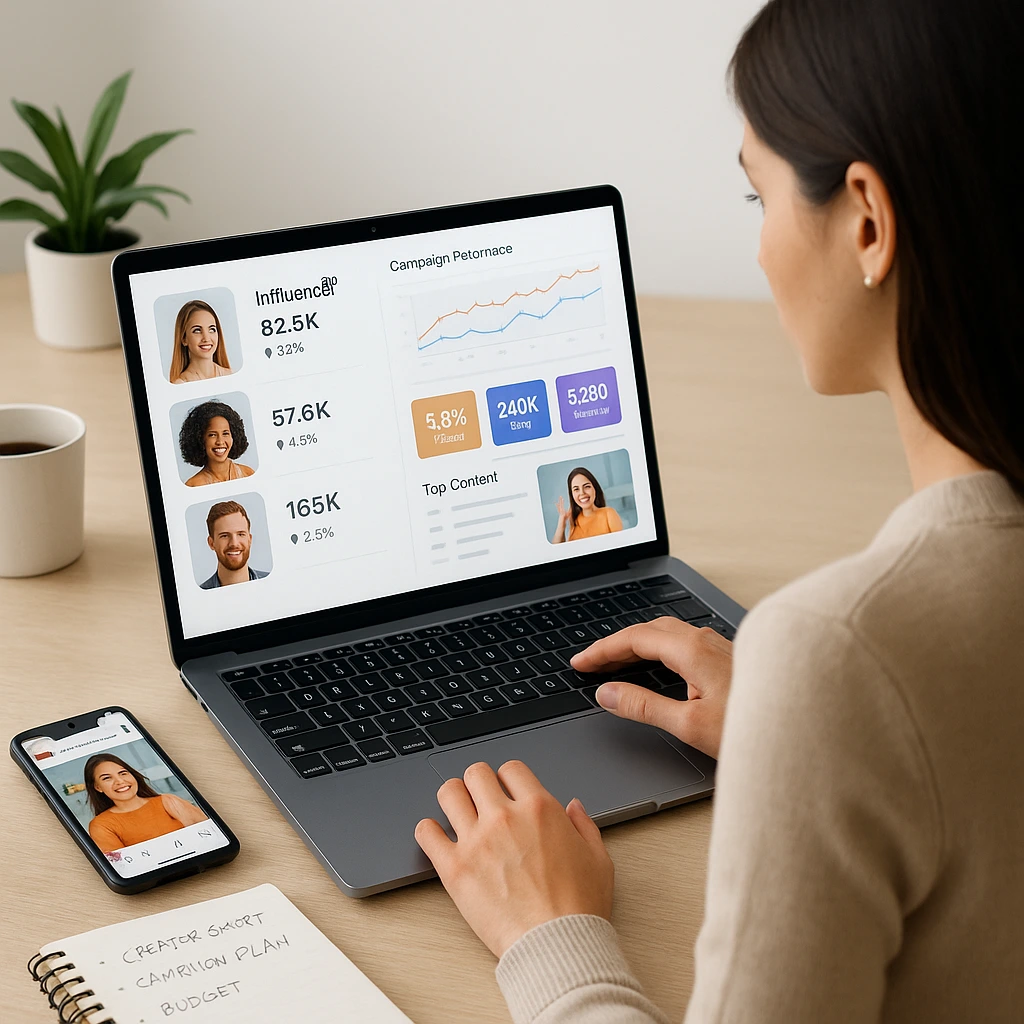
An influencer marketing strategist in 2025 is the person who turns “let’s just work with some creators” into a structured, measurable growth channel. They sit between brands and influencers and make sure campaigns aren’t just pretty content, but tied to real business goals like sales, leads, or long-term brand affinity. In simple terms: they’re the architect of influencer campaigns, not just the person sending DMs to creators.
Instead of chasing follower counts, a strategist focuses on who a creator reaches, how that audience behaves, and whether those people are likely to care about the brand. They define the campaign goals, build the creator shortlist, shape the creative angle, and decide which platforms, formats, and timelines make sense. Then they turn all of that into clear briefs, fair deals, and a plan the whole team can follow.
What Does an Influencer Marketing Strategist Do in 2025?
In 2025, this role is even more data-driven. Strategists are expected to understand analytics dashboards, track metrics like engagement rate, click-throughs, cost per acquisition, and creator-level ROI, and then adjust campaigns based on what’s actually working. Many also work closely with paid media teams, repurposing top-performing influencer content into ads.
You’ll find influencer marketing strategists inside brands, at agencies, and working as independent consultants. The job title might vary slightly— “influencer strategist,” “creator marketing strategist,” “influencer marketing lead”—but the core function is the same: design, manage, and optimize influencer campaigns so they consistently move the needle, not just “go viral.”

Influencer Marketing Strategist Job Description & Daily Responsibilities
An influencer marketing strategist is the person responsible for designing, running, and optimising influencer campaigns end-to-end—not just “finding creators.” In most 2025 job descriptions, the role is framed as a mid–senior position that plans campaigns, manages budgets, coordinates teams, and turns creator content into measurable business results (reach, engagement, leads, or revenue).
In practical terms, the job description typically includes:
- Developing influencer marketing strategies aligned with brand or client objectives and budgets.
- Identifying and vetting influencers based on audience fit, engagement, brand safety, and channel mix.
- Managing campaigns from brief to wrap-up: timelines, deliverables, approvals, and performance.
- Tracking KPIs and reporting, then recommending optimizations or scaling what works.
Day to day, the work is a mix of deep focus and constant coordination. A “normal” day (when nothing’s on fire) often looks like:
- Morning: checking Slack/email, reviewing live campaigns, monitoring metrics and creator content drafts.
- Midday: meetings with internal teams (paid media, brand, social), plus calls with clients or stakeholders to align on priorities.
- Afternoon: sourcing new creators, negotiating terms, writing or refining briefs, reviewing content, and updating reports or dashboards.
Most strategists in 2025 also spend a chunk of time trend-watching—scrolling platforms with purpose, testing new formats (like short-form video or live shopping), and making sure campaigns stay ahead of how people actually consume content.
Core Skills Every Influencer Marketing Strategist Needs in 2025
To succeed as an influencer marketing strategist in 2025, you need a mix of strategy, numbers, and people skills. It’s not enough to “love social media.” You’ve got to prove you can move revenue, not just reach.
First bucket: strategic + analytical skills.
You’re expected to plan campaigns, set clear goals, and understand how influencer content fits into the wider marketing funnel. That means knowing how to define KPIs (reach, engagement, clicks, CAC, ROAS) and actually read dashboards, not just screenshots from creators. Current job descriptions consistently list data analysis, campaign management, and performance tracking as core requirements.
Second bucket: communication, negotiation, and relationship-building.
Most brands now look for people who can build long-term creator partnerships, not just one-off posts. That requires clear written and verbal communication, the ability to negotiate fair fees and usage rights, and the soft touch to maintain healthy relationships when feedback or performance is tough. Many 2024–2025 role profiles highlight communication, negotiation, and relationship-building as non-negotiable soft skills.
Third bucket: execution, creativity, and adaptability.
Influencer marketing moves fast. Strategists are expected to manage multiple campaigns at once, stay on top of platform trends, and adjust strategy when a format or algorithm shifts. Articles and research on creator marketing in 2025 stress adaptability, trend awareness, and comfort with AI and new tools as key for staying effective.
If you can think in campaigns, talk like a human, and decide using data, you’re in a good place for this role.
Influencer Marketing Strategist Salary in 2025: Ranges, Factors & Real Examples
In 2025, an influencer marketing strategist can realistically expect to earn roughly mid–five to low–six figures in USD, with wide variation by country, seniority, and company type. Larger brands investing in paid creator collaborations often pair influencer campaigns with structured social media growth packages and pricing to scale results efficiently.
In the United States, most recent 2025 data puts the role in the $70,000–$120,000 band for mid-level strategists, with some roles going higher in big cities and tech or beauty verticals. Glassdoor data for similar titles shows average total pay for “Influencer Marketing Strategist” around $110k+, with common ranges spanning roughly the mid-$80k’s to mid-$150k’s. ZipRecruiter’s national average is lower (about $91,675/year) because it includes a mix of smaller markets and earlier-stage roles.
If you’re earlier in your career, salaries are closer to “specialist” level. Recent 2025 data for influencer marketing specialists sits around $50k–$70k in the U.S., depending on years of experience. That’s often the stepping stone job into a strategist or manager title.
In the UK and wider Europe, base pay is usually lower than U.S. levels but still competitive for marketing. London-based “influencer strategists” often fall in the £40,000–£55,000 range, based on recent salary submissions for 4–6 years’ experience. Senior or hybrid roles (account manager + strategist) can go higher, especially at established agencies or global brands.
What really moves the number?
- Location (NYC, London, Berlin, etc.)
- Seniority (specialist vs strategist vs manager)
- Industry (tech, beauty, gaming, e-commerce often pay more)
- In-house vs agency vs freelance
If you can prove you drive measurable revenue and not just “reach,” you’ll usually land toward the top of these ranges.
Influencer Marketing Strategist Career Path: Roles, Levels & Growth Opportunities
The career path for an influencer marketing strategist in 2025 is pretty clear: you start close to the work, then move toward owning the strategy (and, eventually, the budget).
Most people begin in execution-heavy roles like Influencer Marketing Coordinator, Assistant, or Specialist. These jobs focus on creator outreach, list-building, tracking posts, and pulling reports—basically learning how campaigns really run in the wild. Industry guides and job boards still position “specialist” as an entry-to-mid level step with hands-on campaign work.
From there, the next step is Strategist or Manager. This is where you start owning campaign strategy, creator selection logic, budget allocation, and deeper reporting. Many 2024–2025 career overviews group “Influencer Marketing Strategist/Manager” together as roles that design campaigns, choose creators, and align activity with business goals.
With more experience, the path usually branches into leadership or independence:
- Head of Influencer/Creator Marketing, Director, or Lead – managing a team, owning the influencer P&L, driving revenue, and setting long-term strategy. Recent role profiles for Heads/Directors of Influencer Marketing emphasise service-line ownership, revenue growth, and leadership.
- Freelance consultant or agency founder – running your own client portfolio, specialising in niches (beauty, gaming, B2B SaaS, etc.), or building a boutique creator marketing agency. Career resources now explicitly list “freelance influencer marketing strategist” and “start your own agency” as common paths.
Along the way, some strategists move sideways into broader digital roles like Social Media Lead, Brand Strategist, or Creative Director, especially after they’ve owned big integrated campaigns.
How to Become an Influencer Marketing Strategist (Step-by-Step Guide)
If you want to become an influencer marketing strategist in 2025, the fastest path is: get real campaign experience, then package it as strategy. A strategist needs to understand how influencer campaigns support a solid social media growth strategy, not operate in a vacuum.
Here’s a simple, realistic path:
- Learn the fundamentals (quickly, not forever).
Get up to speed on influencer marketing basics: campaign types (awareness, UGC, affiliate), key metrics (reach, engagement rate, CTR, ROAS), and major platforms (Instagram, TikTok, YouTube). Short online courses and free guides from influencer platforms are enough to start—you don’t need a year-long program. - Get hands-on with small campaigns.
This is the part most people overthink. You can start by:- Helping a small brand or local business with a low-budget creator test.
- Running micro-influencer or UGC campaigns for a startup, agency internship, or even your current job if you’re in social/marketing.
Your goal here: collect 2–3 mini case studies with before/after numbers.
- Build a portfolio that screams “strategist,” not “assistant.”
Document campaigns in a simple deck or Notion page: goal, audience, creator selection logic, what you did, results, and what you’d improve. Recruiters in 2024–2025 repeatedly mention portfolios and concrete examples as a big differentiator for strategy roles. - Level up your title and environment.
Apply for Influencer Marketing Specialist / Coordinator roles if you’re early, then target Strategist / Manager roles once you’ve owned campaign planning and reporting. Update your LinkedIn headline and summary so it clearly signals “influencer/creator marketing strategy,” not just “social media.” - Stay on top of trends and tools.
Follow creator economy newsletters, platform update blogs, and experiment with discovery and analytics tools. The people who progress fastest are the ones who can explain why a campaign worked—and what they’d change next time.
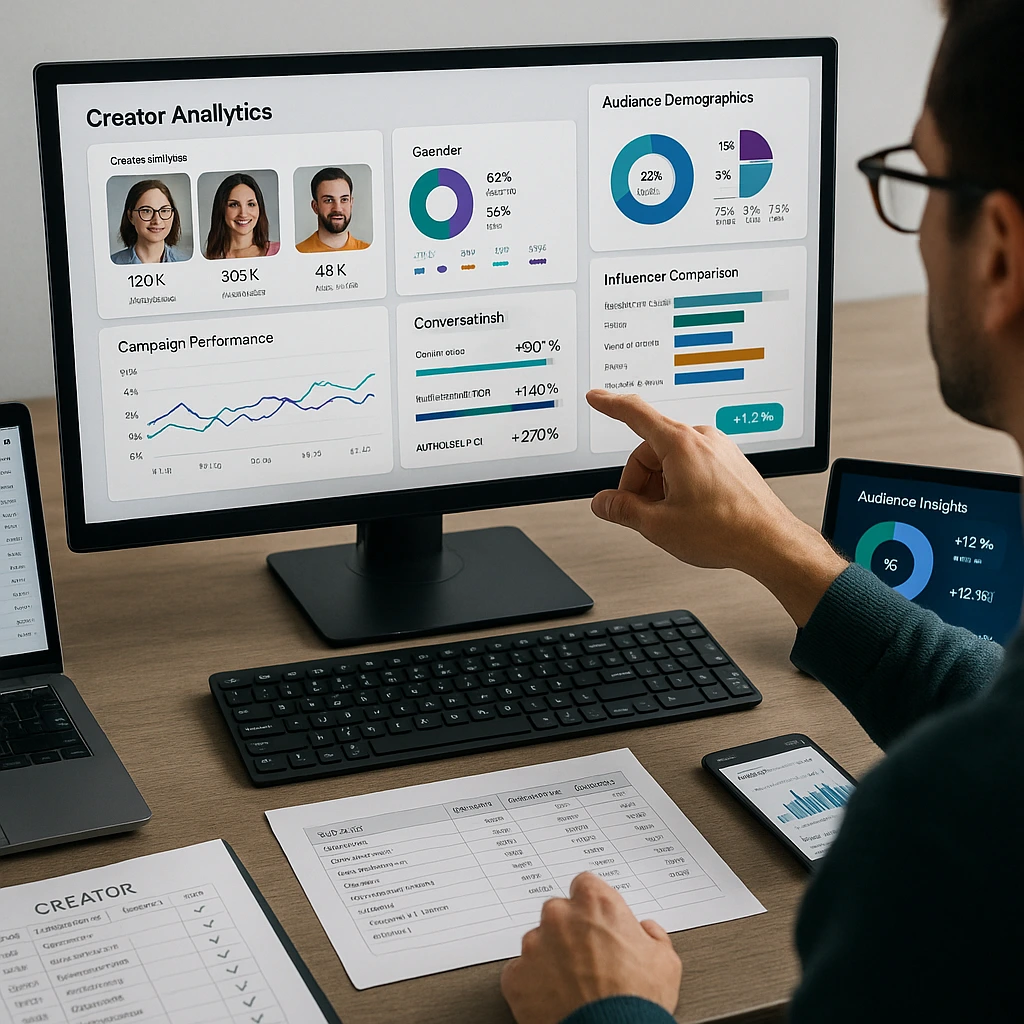
Tools, Platforms & Metrics Every Influencer Marketing Strategist Should Know
You don’t need every shiny tool on the market as a strategist in 2025. You need a small, reliable stack and a clear set of metrics you look at every single week.
Most strategists lean on influencer marketing platforms to handle the heavy lifting: creator discovery, audience vetting, campaign tracking, and reporting. Current 2025 roundups repeatedly highlight platforms like Brandwatch, Grin, Upfluence, CreatorIQ, Shopify Collabs, Impact, and Klear as go-to options for brands that want end-to-end management and better data on audience demographics and engagement. Many of these tools now bake in AI features for fraud detection, creator lookalikes, and performance predictions, which lines up with the wider shift toward AI-assisted campaign planning and measurement.
On top of that, strategists usually plug into:
- Analytics & attribution tools – GA4, in-platform analytics, affiliate/discount-code tracking, and dedicated ROI tools to tie creator content back to clicks, conversions, and revenue.
- Collaboration tools – email/CRM, Notion/Sheets, and project tools like Asana or ClickUp to keep briefs, timelines, and approvals under control.
Most influencer strategists rely on structured workflows and campaign templates to plan deliverables and track performance. You can use our free influencer marketing campaign template to build the same strategic framework.
Across 2024–2025 reports, the same core KPIs keep showing up: reach and impressions, engagement rate, click-through rate, conversions/sales, ROI/ROAS, cost per acquisition, brand sentiment, and share of voice. Interestingly, industry data now notes that most brands still start with reach/impressions, then look at engagement, and finally conversions once tracking is properly set up.
So, your job isn’t to track everything. It’s to pick a handful of metrics that match the campaign goal (awareness vs sales) and obsess over those.
When Brands Should Hire an Influencer Marketing Strategist (And How to Use Them Well)
Brands should bring in an influencer marketing strategist when influencer is no longer a “nice-to-have test,” but a real budget line and growth channel. In 2025, that’s most brands: around 86% of marketers say they use influencer marketing, and the share of U.S. brands using it is projected to hit a similar level, with the majority planning to work with more creators, not fewer.
So when do you actually need a strategist, not just an intern sending emails?
- When you’re working with multiple influencers per campaign and it’s getting messy to track content, links, and timelines. (Over 70% of brands now work with at least ten influencers per campaign.)
- When you’re spending enough that ROI matters. Brands report an average return of about $5.78–$6.50 in revenue for every $1 spent, and more of them are tracking detailed ROI, not just likes.
- When the risk of getting it wrong (brand safety, disclosure, misalignment) feels high. 2025 agency reports stress how noisy and risky the space has become for brands trying to go it alone.
How do you actually use a strategist well?
Give them a clear brief on your business model, margins, ICP, and brand guardrails, not just “we want more followers.” Involve them early, before you lock budgets or concepts, so they can shape goals, creator mix, and measurement. Treat them as a partner across channels (organic, paid, affiliate, PR), not a bolt-on.
Many brands start with an agency or external strategist, then build in-house once influencer becomes a recurring, six-figure channel—essentially following the “test externally, scale internally” model described in recent in-house team guides.